 Image 1 of 2
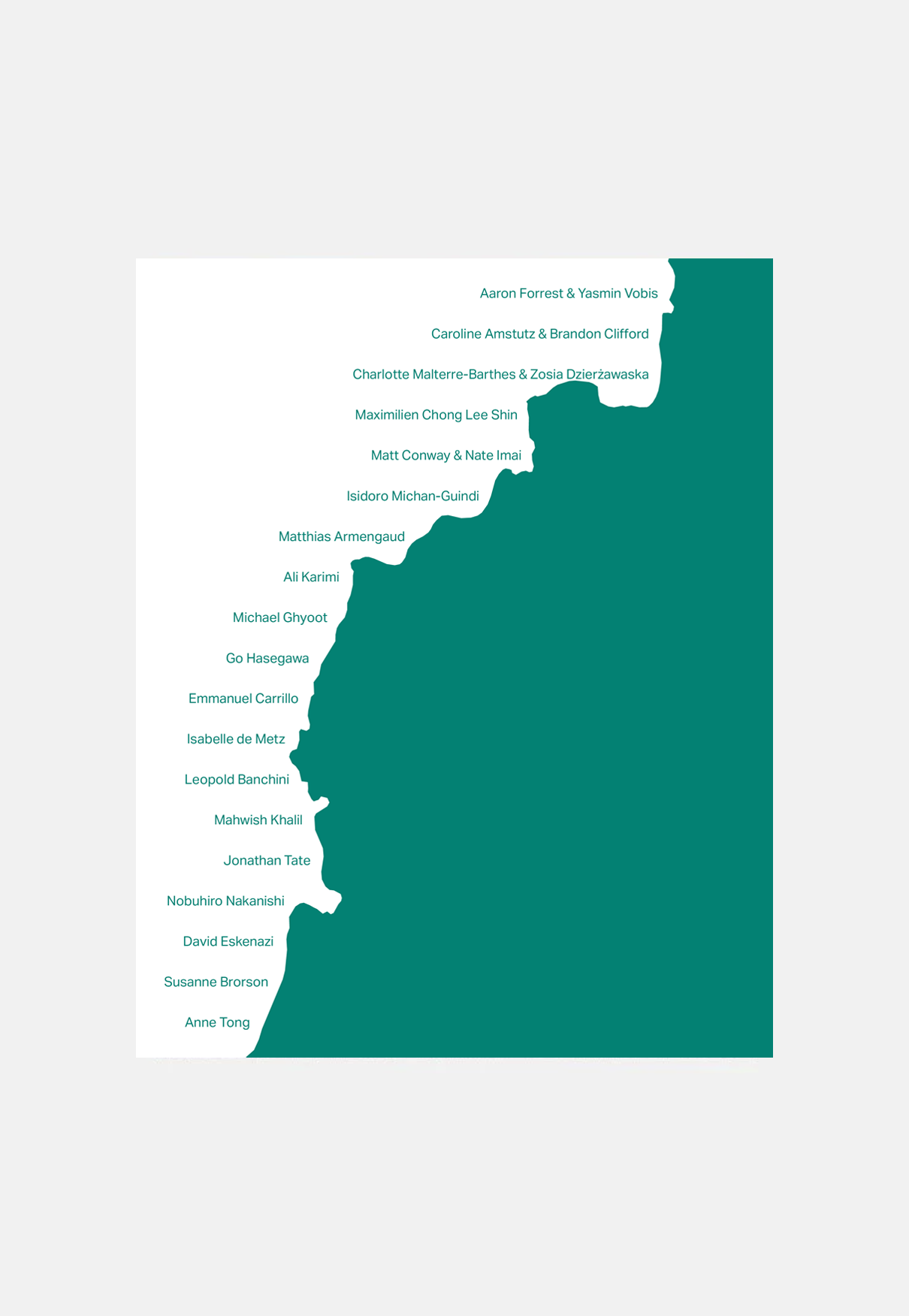 Image 2 of 2
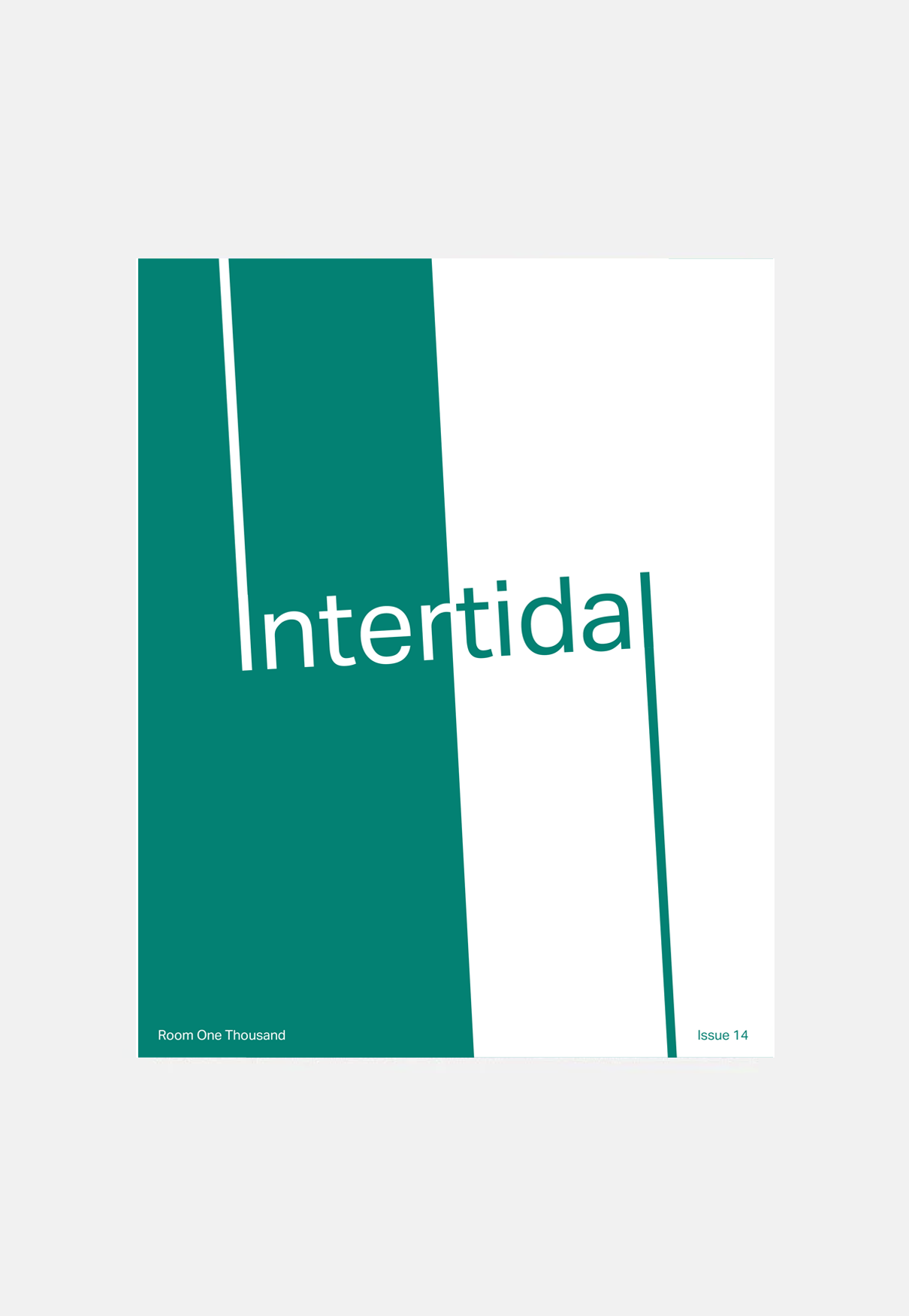
ISSUE 14: Intertidal
The 14th issue of Room One Thousand looks to the intertidal zone as a space of overlap shaped by the constant push and pull of external forces. Driven by the moon’s gravitational pull, each tide marks a subtle shift, predictable in its rhythm, but never the same. To thrive in this zone is to exist between exposure and submersion, stillness and motion, depletion and recharge. In a state of continuous change the waters shifting edge is home to rich biodiversity, a space of rapid evolution where flexibility and adaptation are a requirement.
As architects, we are familiar with ideas of longevity: foundation, solidity, and endurance. Yet we live in a time of economic precarity and climate instability that calls on an architecture to respond with solutions that are nimble, flexible, and balanced. Considering an approach that is “in-between” could look like balancing affordability and delight in design, or designing with integration of natural cycles of fire and water.
The intertidal zone is ecological, political, cultural, and urban. Here, life experiences both stasis and fluctuation. The shifting edges between land and sea, city and nature are not just borders but boundaries: sites of exchange, tension, and possibility. As urban densities increase, climate pressures mount and fluctuating economies create instability, can the interstitial become a mode of architectural thinking? How can architecture address the “in-between” to create balance in moments of flux?
Yasmin Vobis and Aaron Forrest
Brandon Clifford and Caroline Amstutz
Jonathan Tate
Go Hasegawa and Henry Peters
Susanne Brorson
Emmanuel Carrillo
Isidoro Michan-Guindi
Matt Conway and Nate Imai
Maximilien Chong Lee Shin
Leopold Banchini
Michaël Ghyoot
Anne Tong
Charlotte Malterre-Barthes and Zosia Dzierzawaska
Civil Architecture and Ali Karimi
Matthias Armengaud
David Eskenazi
Mahwish Khalil
Isabelle De Metz
Nobuhiro Nakanishi
Orders will be fulfilled late May 2026.
ISSUE 14: Intertidal
The 14th issue of Room One Thousand looks to the intertidal zone as a space of overlap shaped by the constant push and pull of external forces. Driven by the moon’s gravitational pull, each tide marks a subtle shift, predictable in its rhythm, but never the same. To thrive in this zone is to exist between exposure and submersion, stillness and motion, depletion and recharge. In a state of continuous change the waters shifting edge is home to rich biodiversity, a space of rapid evolution where flexibility and adaptation are a requirement.
As architects, we are familiar with ideas of longevity: foundation, solidity, and endurance. Yet we live in a time of economic precarity and climate instability that calls on an architecture to respond with solutions that are nimble, flexible, and balanced. Considering an approach that is “in-between” could look like balancing affordability and delight in design, or designing with integration of natural cycles of fire and water.
The intertidal zone is ecological, political, cultural, and urban. Here, life experiences both stasis and fluctuation. The shifting edges between land and sea, city and nature are not just borders but boundaries: sites of exchange, tension, and possibility. As urban densities increase, climate pressures mount and fluctuating economies create instability, can the interstitial become a mode of architectural thinking? How can architecture address the “in-between” to create balance in moments of flux?
Yasmin Vobis and Aaron Forrest
Brandon Clifford and Caroline Amstutz
Jonathan Tate
Go Hasegawa and Henry Peters
Susanne Brorson
Emmanuel Carrillo
Isidoro Michan-Guindi
Matt Conway and Nate Imai
Maximilien Chong Lee Shin
Leopold Banchini
Michaël Ghyoot
Anne Tong
Charlotte Malterre-Barthes and Zosia Dzierzawaska
Civil Architecture and Ali Karimi
Matthias Armengaud
David Eskenazi
Mahwish Khalil
Isabelle De Metz
Nobuhiro Nakanishi
Orders will be fulfilled late May 2026.