All Work, Is in the Drawing
Jennifer Bonner
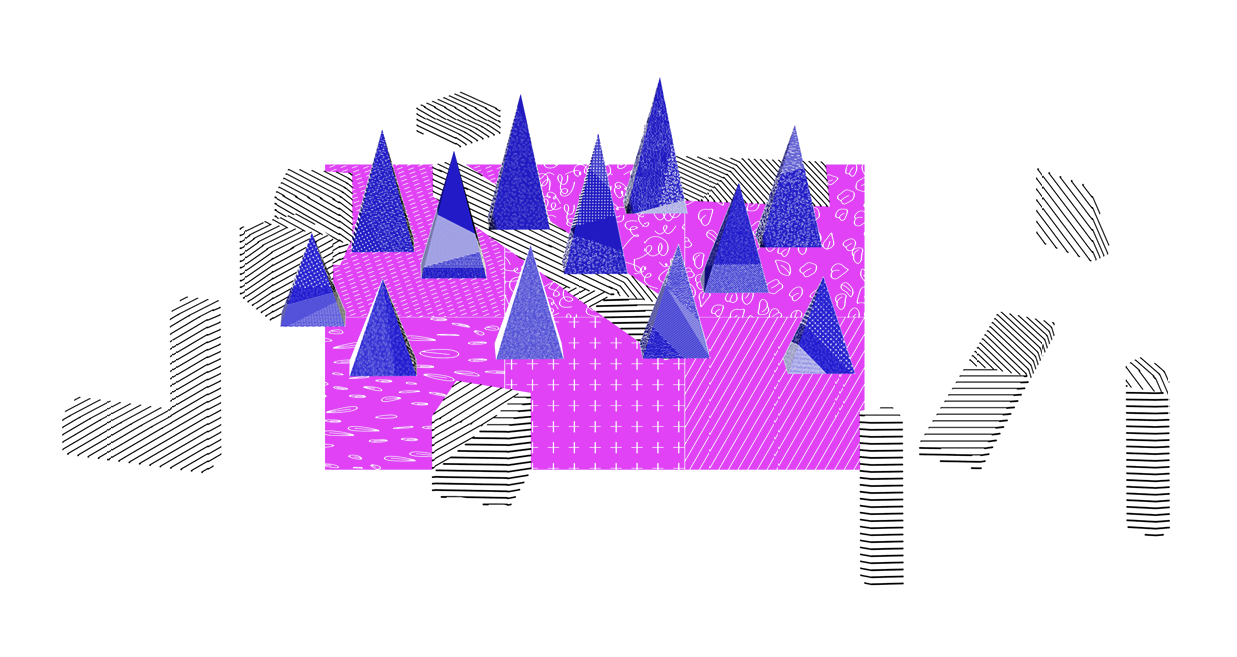
Figure 1. Perspective Drawing, Another Axon. (Courtesy of MALL)
In recent years, a steady stream of contemporary architects have worked on installations for galleries (M&A, Storefront, pinkcomma, Jai&Jai), pavilions for biennials (Venice, Chicago, Istanbul, Seoul), and temporary structures for academic institutions (SCI-Arc, WUHO, Michigan, MIT), to name a few. It is their (our) primary work. With installation fatigue on the horizon and faced with the challenge to make yet another temporary architecture as part of the 2017 Design Biennial Boston, MALL turns to the drawing as a primary concern and decidedly doubles down on the ordinary. But to be clear, this work is not about shape.
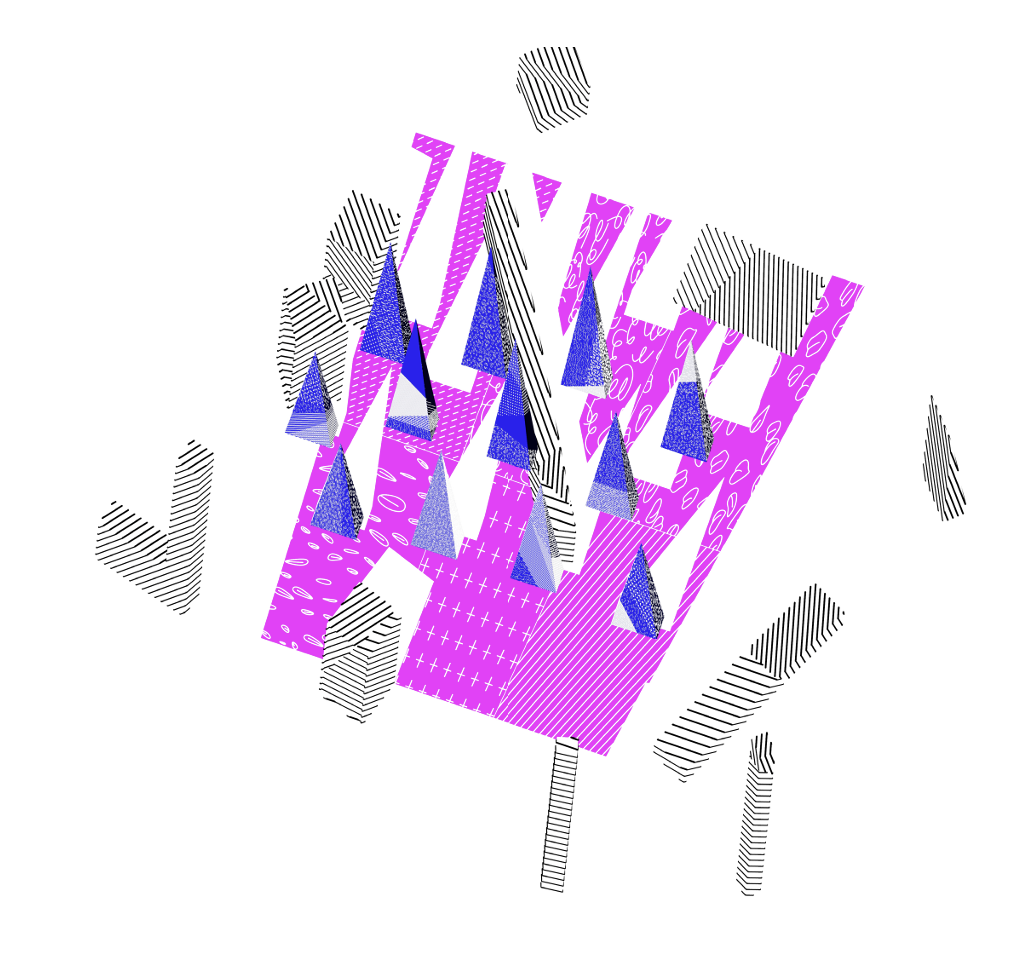
In an effort to focus attention away from the installation as an object towards the installation as an architectural drawing, staging and arranging the drawing’s con tent is a top priority. As proponents of open-source technology, first, we cruised the Sketchup 3D Warehouse and looked for reputable minimal art sculptures to snag. We located a few Donald Judd’s, a Carl Andre, and a Robert Morris. Moments later, we found a John McCracken and a Peter Alexander—our download list complete. As curators, we are making our own impossible show. Far too precious to exist out doors on Boston’s Rose Kennedy Greenway, these minimalist sculptures are primed to be redrawn and reworked, co-opting new meanings for the architectural drawing. As architects, we are referencing art objects found in the history, yet altering the original forms to question conventional drawing techniques: arrangement of the plan, composition of the perspective, and flatness of the axonometric from multiple vantage points. As a result, all work is in the drawing (Figure 1, Above).
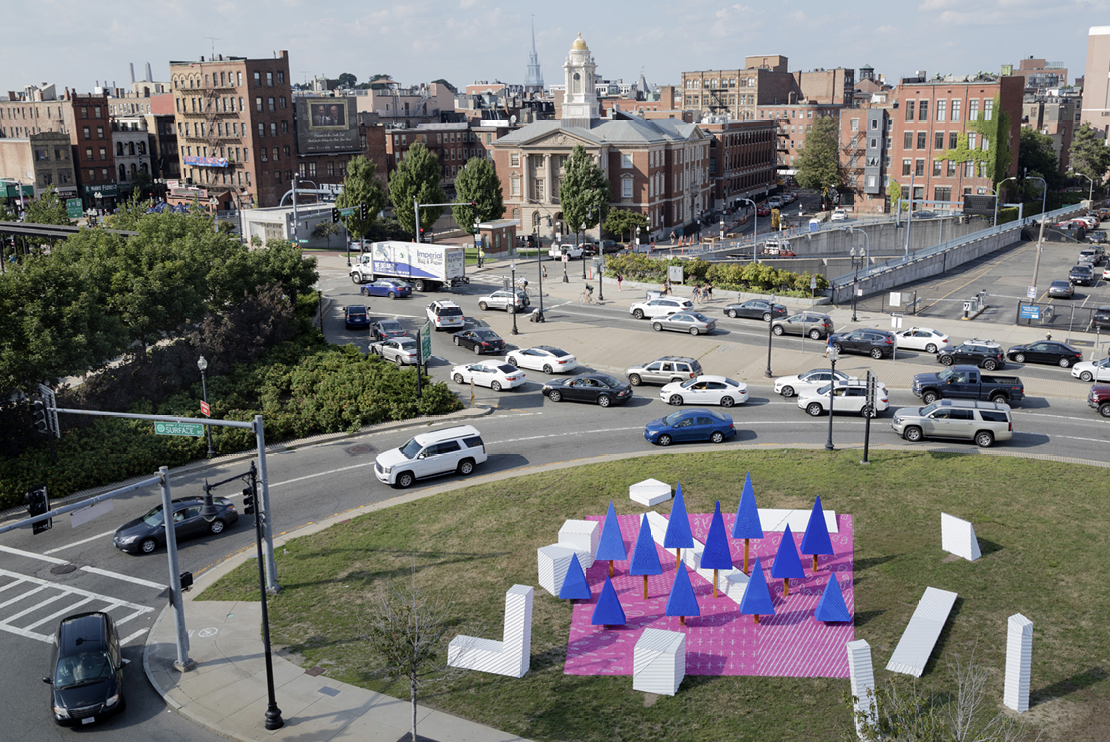
Another Axon uses the architectural axonometric drawing to make three-dimensional space and asks the question, “Is a drawing architecture?” The promise of such an exercise might be the possibility of multiple interpretations, denying the understanding of a singular pavilion, as in “Ah-ha, I get it!” These positions are not privileged, but urban, in-the-round, and can be named. The “ideal” view of the installation, seen from the top level of an adjacent mundane parking garage, is positioned at seventy feet above the sidewalk (Figure 2, Right).
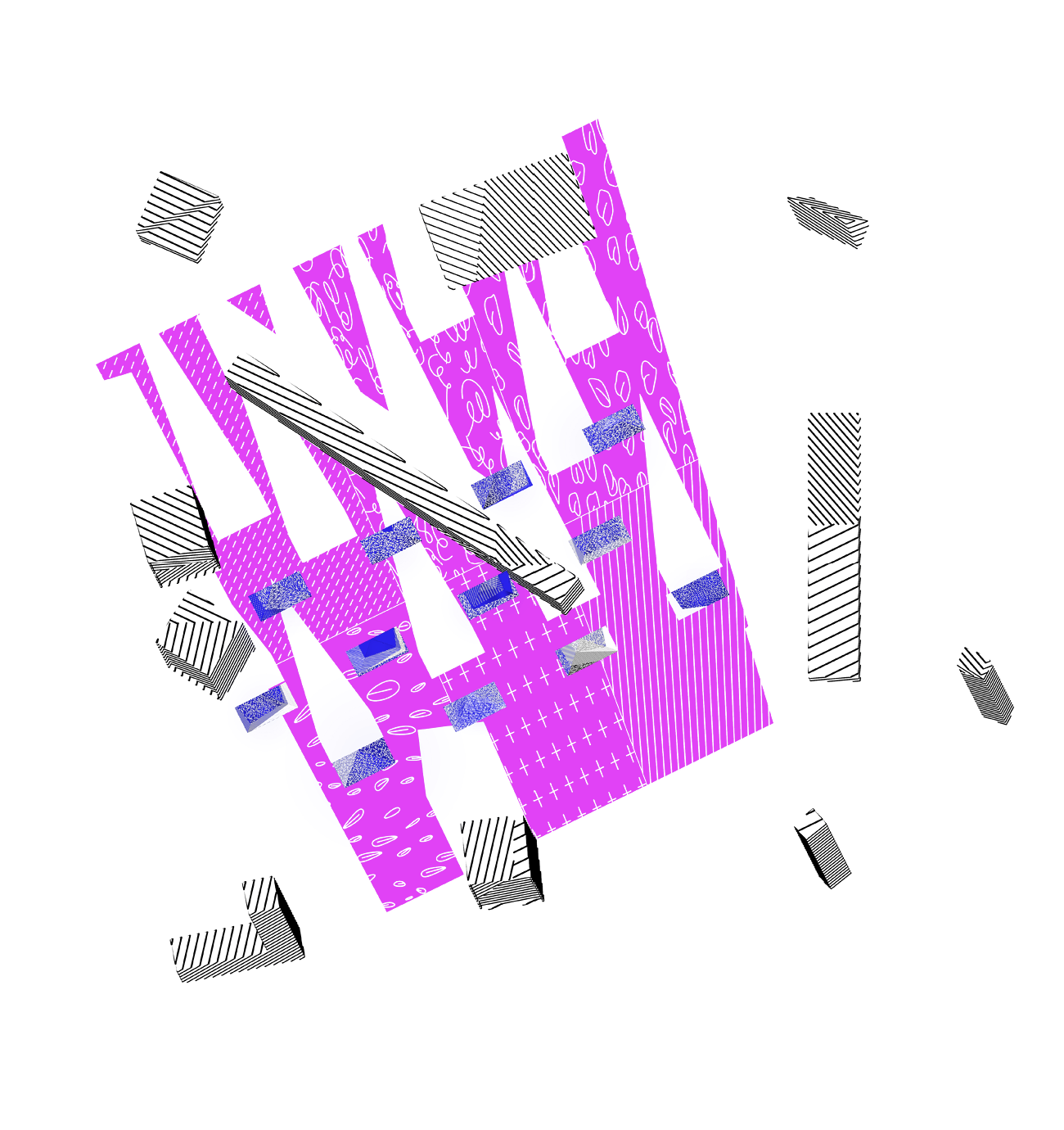
Here, the viewer’s perspective is a flattened axonometric view where the drawing is comprised of an assemblage of eleven minimal objects, a stand of twelve trees, and a six square field drawing. Alternatively, pedestrians on the ground walk through the installation and engage skewed forms, parallel planes of materials, primitive-v trees, and undecipherable scribbles, producing yet another reading of the work.3 More akin to architectural debris, Another Axon’s scatter-plan allows objects to sit loosely and awkwardly next to one another (Figure 3, Left). Momentarily sitting in traffic on the I-93 off-ramp drivers observe a flattened “backside” of the project primarily made of vinyl siding. From this third vantage point, seated in the car, the six square drawing on the ground is rendered illegible while the vinyl trees become the primary image (Figure 4, Left & Below).

If the result of a drawing as an architectural installation has the potential to orchestrate varied urban views with its participants, the technique of the drawing is able to set up graphic and tactile readings of the project. Mixing the architect’s CAD hatch library (arbitrary abstract visuals) with the (real building materials), linework is projected onto the drawing both in 2d and 3d. The hatch drawings on the surface of the trees are only later to be reworked by manipulating the depth of the tooling paths during the CNC process. Lastly, Another Axon relies heavily on contemporary reproduction strategies where methodologies of borrowing, downloading, tracing, and sampling take active roles in the project. Just as, lines, dashes, and hatches leave behind patterns, edges, and graphic residue in the architectural project, the accumulation of stuff in the digital drawing be comes executable details in the material world. Meaning, hairline swiggles and fat cross-symbols become something real. directionality of a cladding system

The selection of materials for Another Axon reinforces the constructed, perfect axo nometric view but also places emphasis on the “ordinary” in architecture. A further continuation on the search for how drawing might redirect spatial norms can be seen in the project’s collapse of minimal art (high) with ordinary materials (low). John McCracken’s high-gloss finish of polyester resin found in Six Columns (2006) and Robert Morris’s mute all-white abstract Untitled (L-Beams) (1965) are exchanged for dull, plasticky siding hung at multi-directions incongruent with now skewed forms.
Three traditional exterior building materials are sourced from ubiquitous residential and commercial buildings across the United States—vinyl siding, EIFS (a synthetic stucco), and artificial turf. The materials are used unconventionally, distorted through color and application from their original use. Vinyl siding is installed upside down and the paint stripping used on athletic fields no longer demarcates rules of a field but is rather turned into a 2,000 sqft drawing. These traditional materials also engage other forms of tradition and appear as a new type of scale figure for the architect (Figure 5, Right).
Avoiding any conclusionary remarks, MALL offers a project postscript: If we misread the editors’ prompt “Work, or Sim”4 (because misreadings are productive for the discipline), Another Axon is Sim(City). Meaning more sandbox game, less architectural spec writing language because in the age of drawing architectural installations there is no one around to read the specs. Lastly, MALL acknowledges the current trend in contemporary architecture, where representation is the livelihood of many young practices. Here, we attempt to exagger ate the basic act of building (translation of drawing to constructed work) towards the project of “realizing representation.” For reasons of amplification, and as the title suggests, we made yet another axonometric drawing, although, completely unnecessary (See Figure 6, Below).