Poly Canyon Accessories
Dylan Kruegar
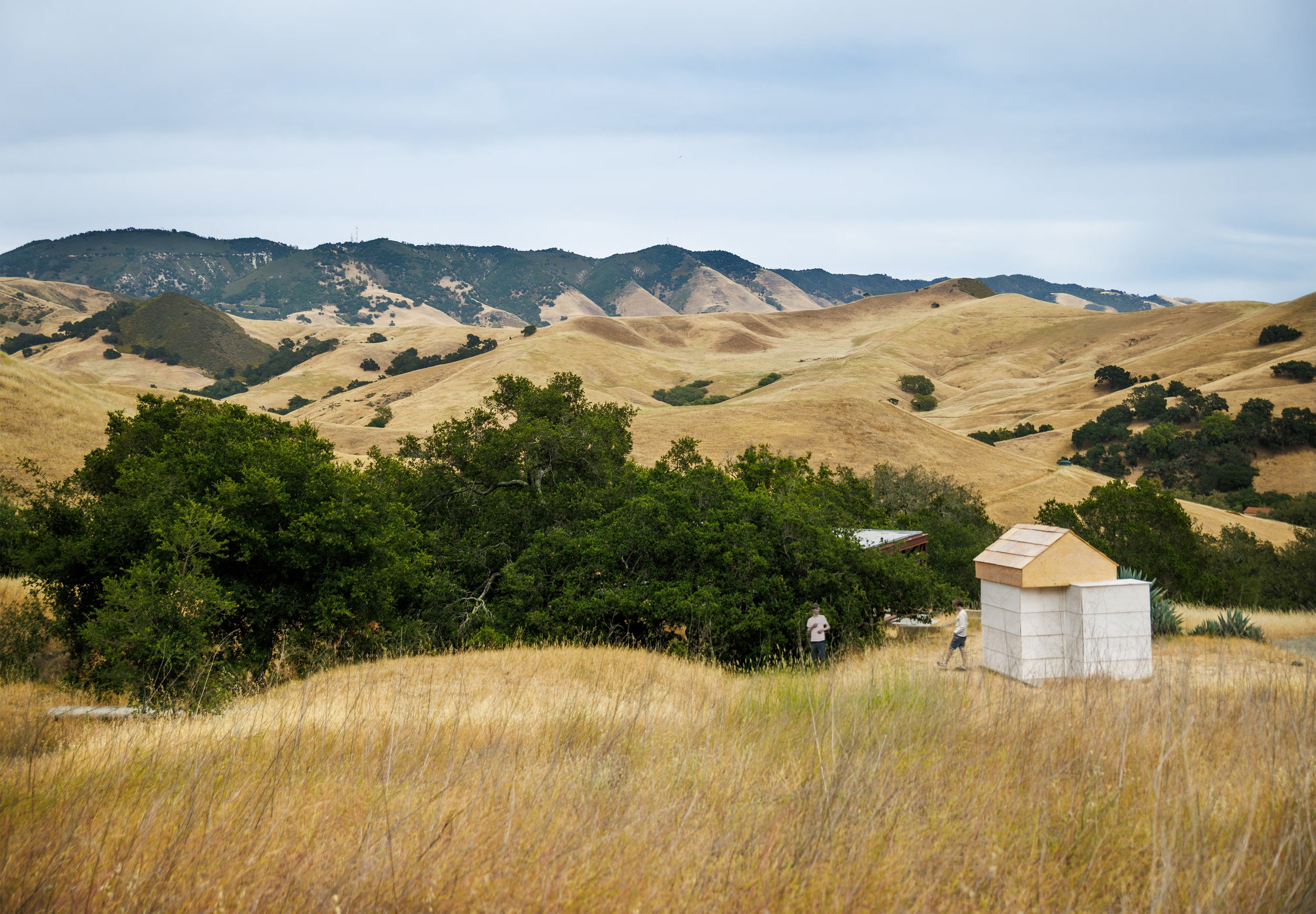
Poly Canyon Accessory. Photography by Joe Johnston.
You might know of California’s Central Valley because you passed through it on your way to Yosemite National Park, or perhaps from the famed Sun-Maid California Raisins television commercials and the subsequent Emmy-winning blues group—or maybe you just eat a lot of almonds. You might not know the area’s architecture, for it is not the primary physical or visual presence. Instead, the region is composed of equipment and machinery (plows, harrows, seed drills, tractors, combines, and balers); hand tools (shovels, rakes, pruning shears, and harvesting knives); containers (crates, baskets, barrels, and burlap sacks); and waste byproducts (packaging, trimmed branches, slurry, and ash). Beyond these objects of agricultural production, accessory structures show an immense presence within the locale. Because the area’s iconic farmhouses are often hidden behind dense crop and orchard contours, Accessories are the only semblance of built landmarks in California’s Central Valley
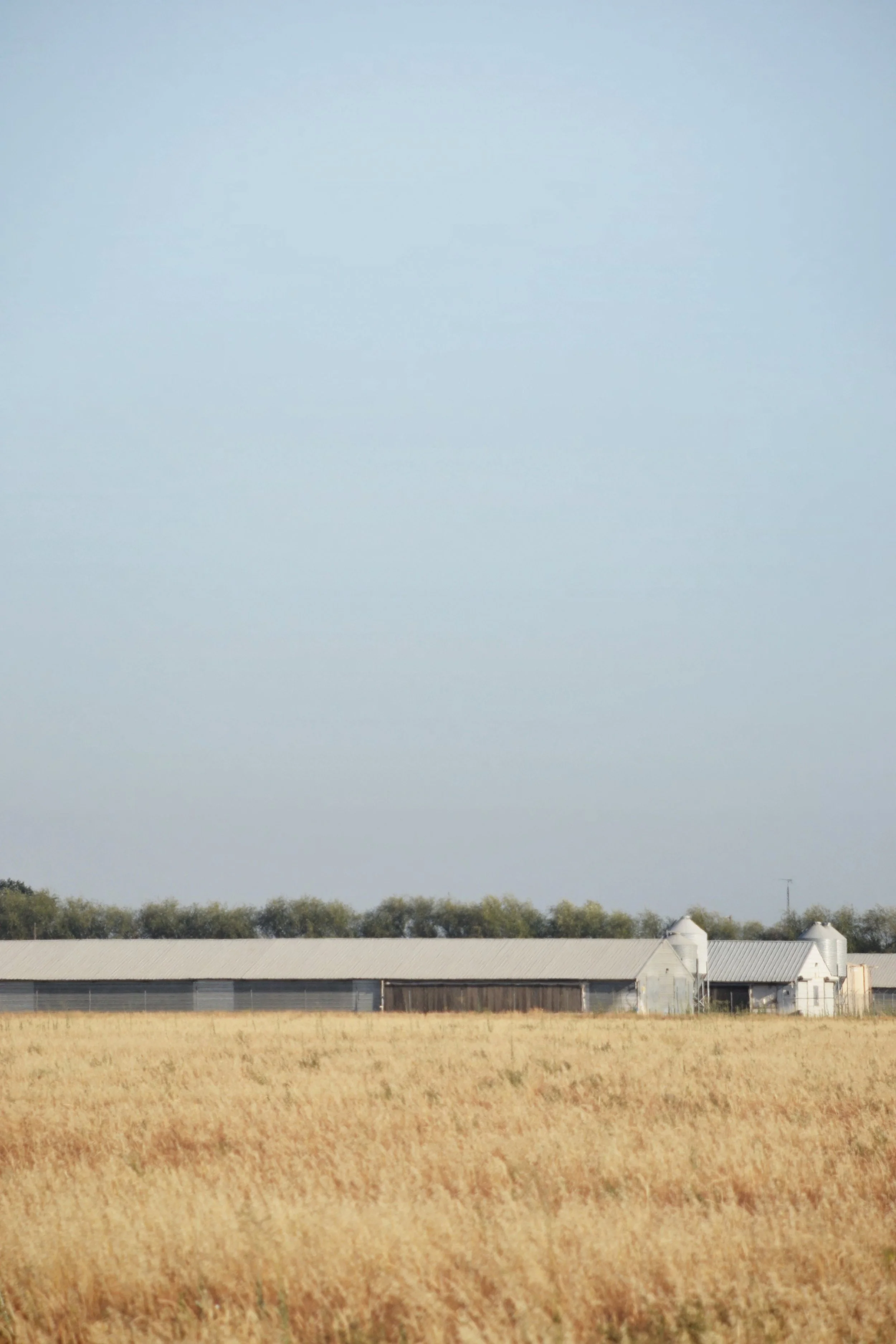
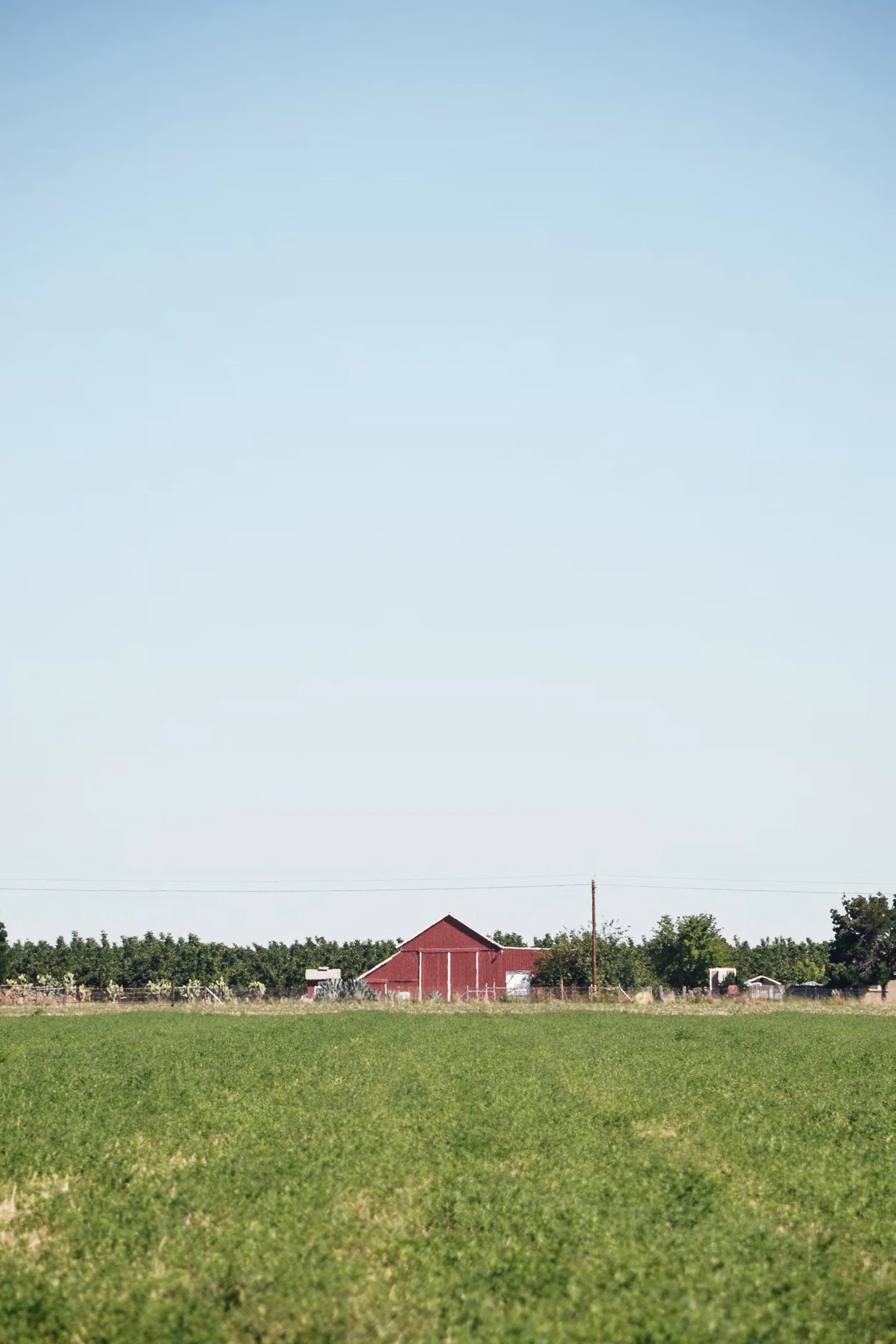
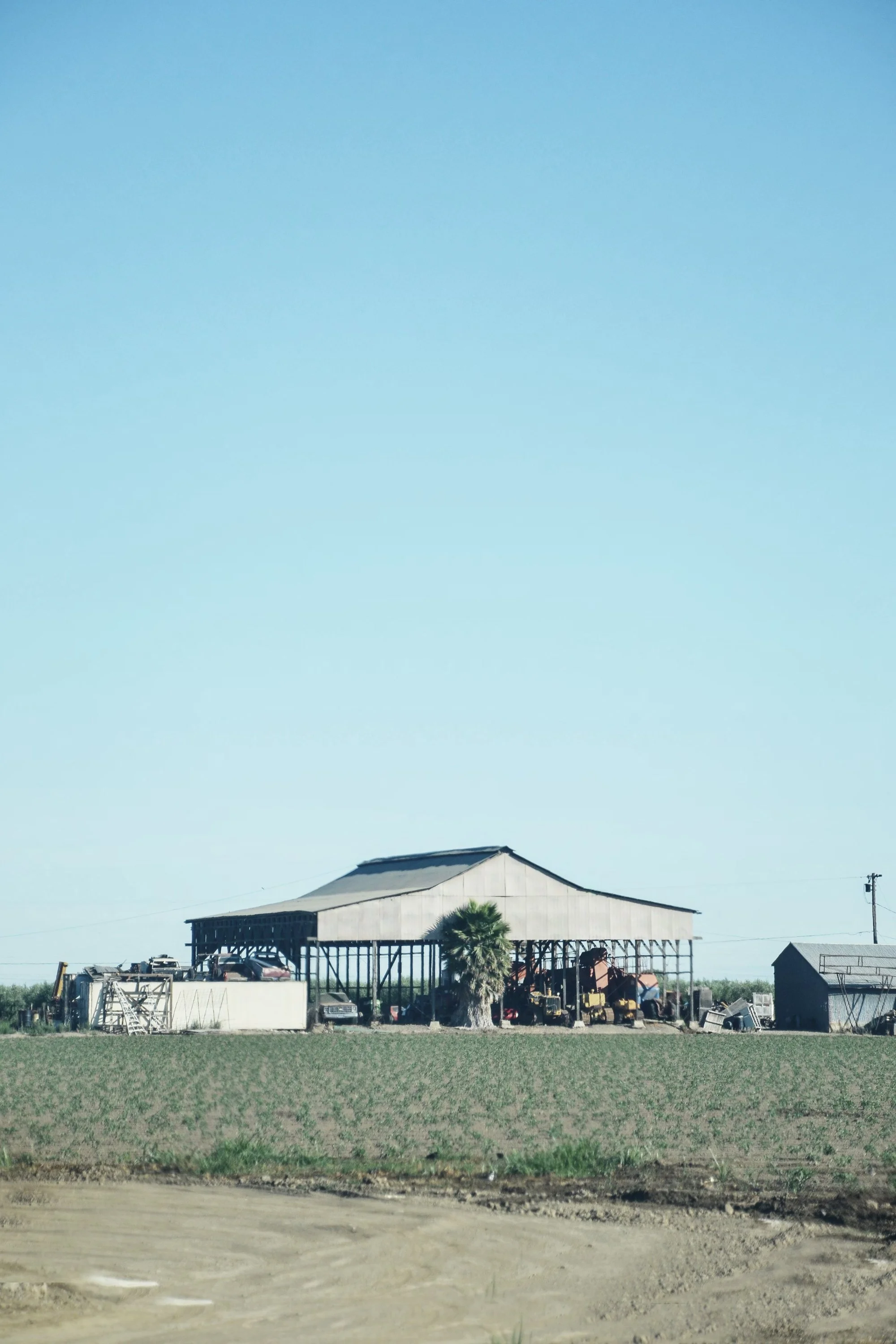
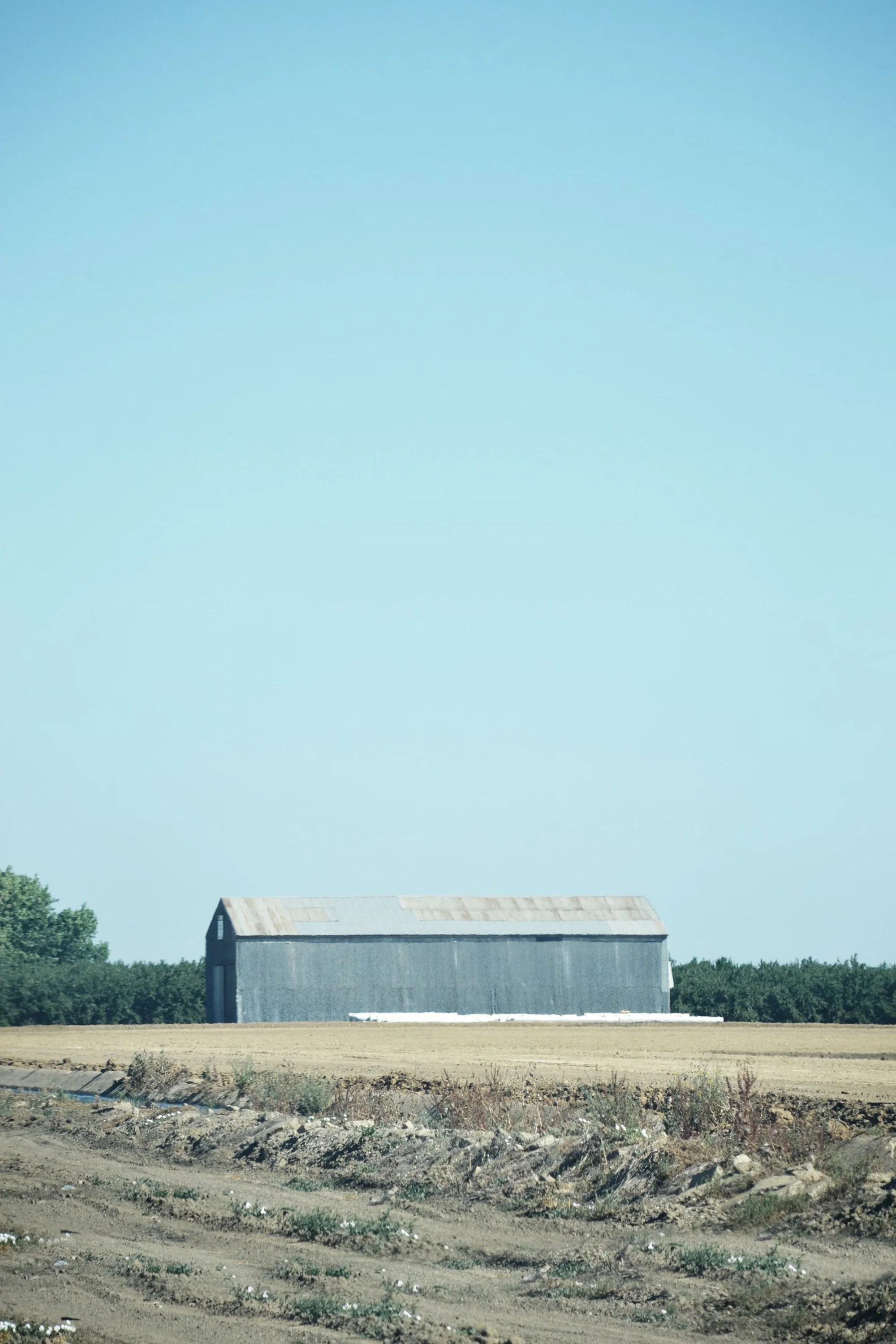
I concede that Accessories are not visually dazzling by standardized architectural metrics. However, they should be acknowledged as valuable to the field. Accessories represent a cohesive typological group—their scales, forms, materials, colors, and programmatic uses provide a notably consistent visual language. As a typological series, Accessories have determinable qualities: mute, modest, rude, subdued, humble, unassuming, or somber. We can evaluate the group using a shared set of terms to produce a catalog of quotidian forms that challenge the dominant values of contemporary architectural discourse
“Expanding architectural dialogue to include these underappreciated structures fosters a more diverse and representative understanding of the built environment.”
Acknowledging the value of architecture outside established norms can be difficult, but it may support a more diverse representation in our often unspoken architectural dialogues—something many would argue is a necessary shift for our historically insular community. Architectural discourse has long prioritized landmark buildings, aesthetic innovation, and the work of recognized architects, while overlooking the everyday structures that quietly shape our built environment. This exclusivity is reinforced by academia, which teaches a standard canon of acceptable architectural examples. As a result, Central Valley Accessories are overlooked as legitimate contributions to architectural practice. Expanding architectural dialogue to include these underappreciated structures fosters a more diverse and representative understanding of the built world.
Rooted in type as they are, Accessories emerge as manifestations of residual systems—they are rarely designed or built by architects. Instead, their formal, material, and programmatic characteristics result from cultural, political, economic, and legislative pressures. To speak about Accessories is to speak about the residues of the commonplace. And the only way to champion the residues of the commonplace is to encourage institutional conversation.
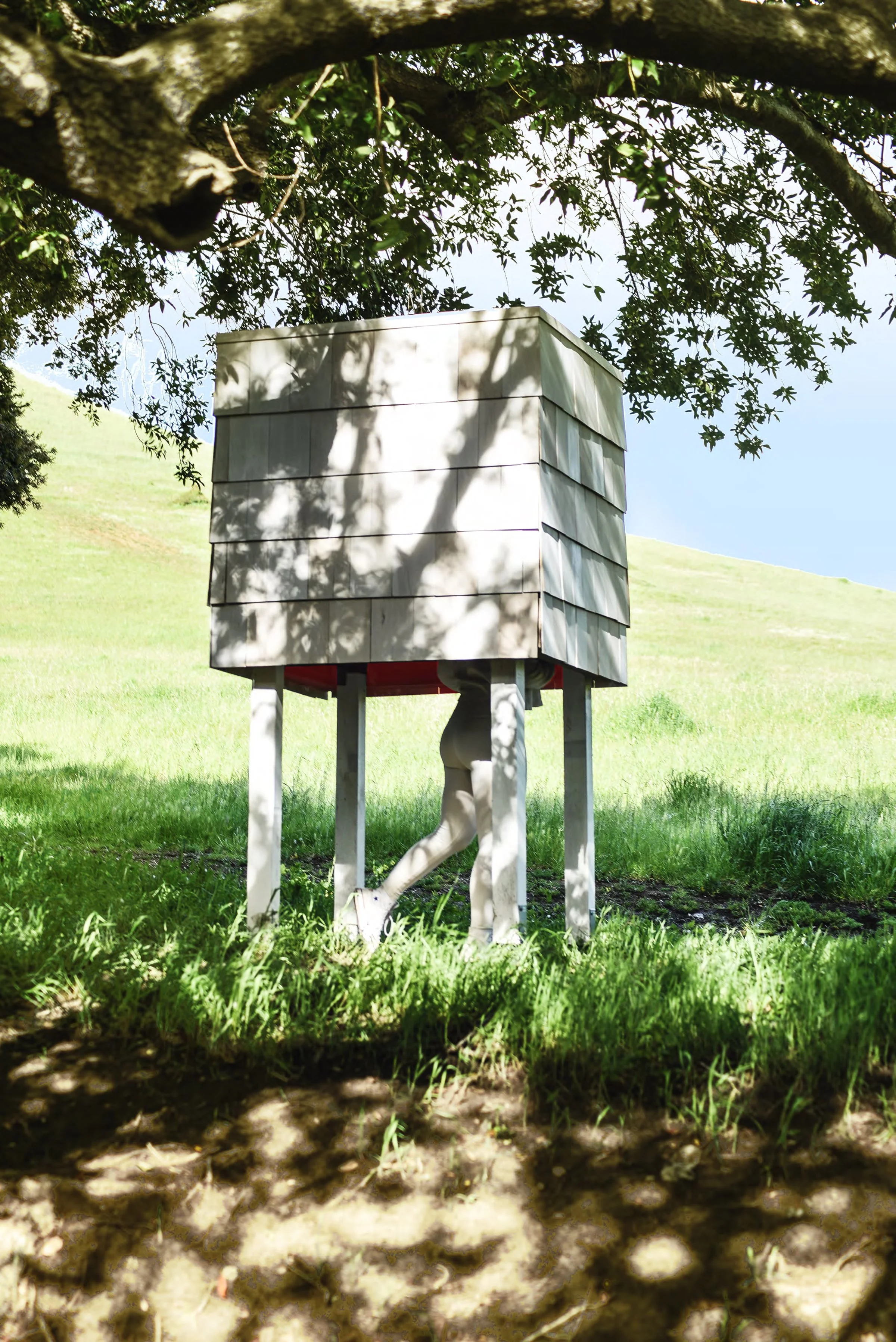
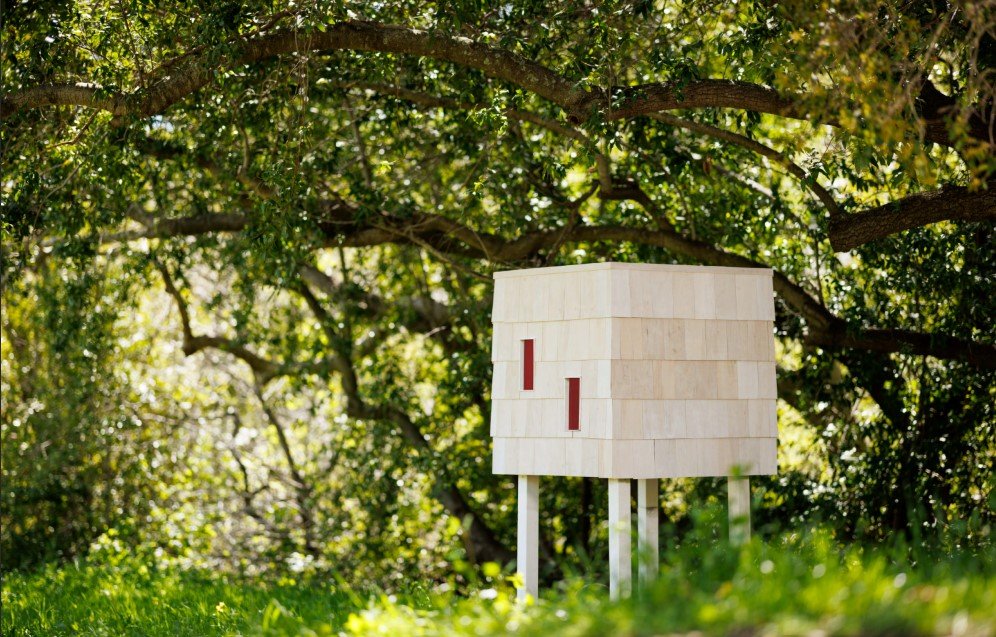
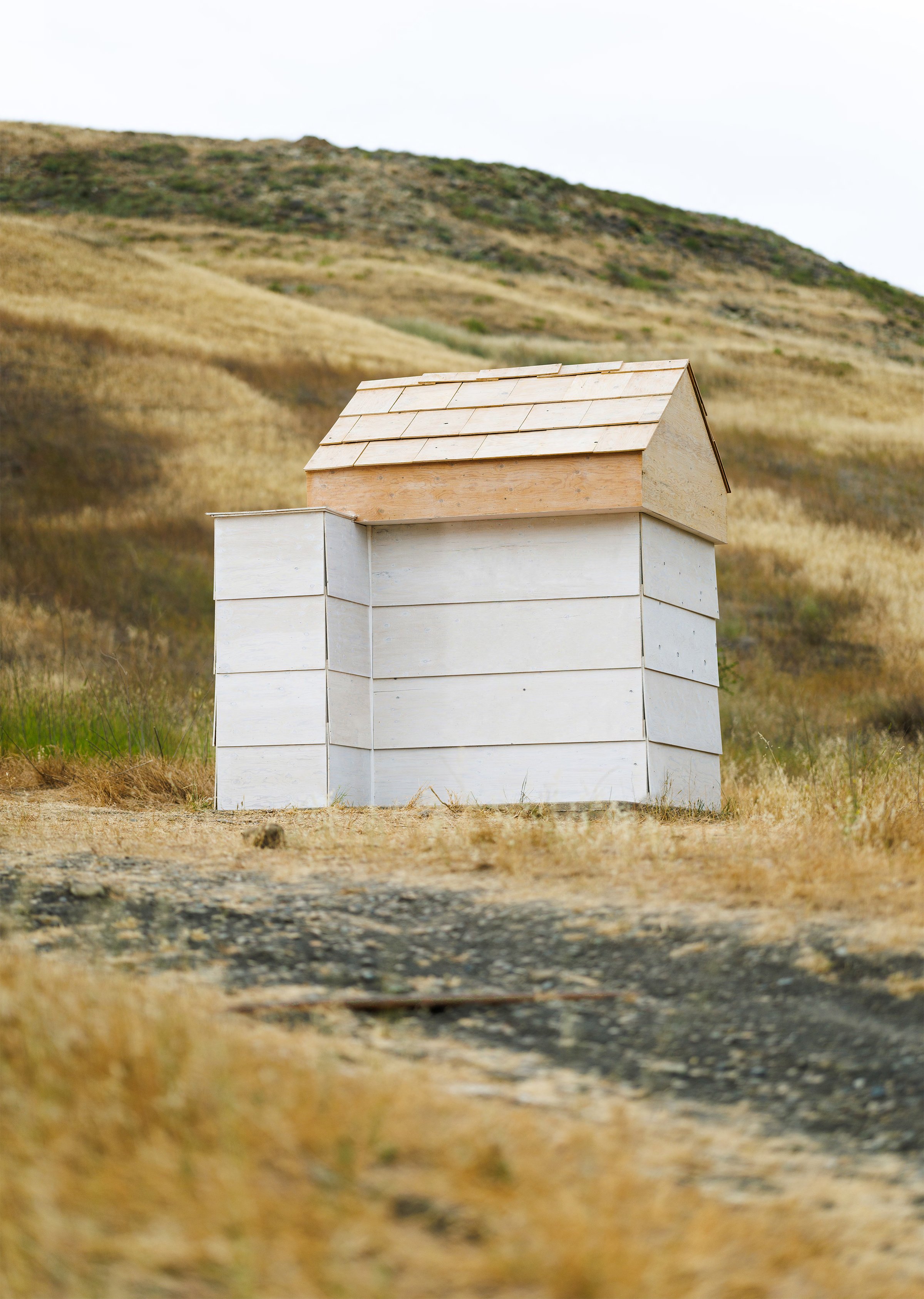
Poly Canyon Accessories, located on the campus of Cal Poly, San Luis Obispo, are installations designed in 2023 with fabrication assistance from Hannah Cho, Ella Kawamoto, Josh Puce, Lea Roussely, Arthur Toullant, and Paul Zhang. The installations highlight the overlooked built fabric of California’s Central Valley. The design process began with an exhaustive photographic survey of existing conditions in the Valley. Photographic portraits of accessory structures were processed and cataloged, with an eye for formal and material parallels found in the typology set. Those trends were repurposed to design representative installations that celebrate the typology.
Both characterized by limited interior access, they define the space around them. This mimics the interactional quality of the Accessory typology— structures only accessible from a visual distance. The way a viewer engages with Accessories is largely superficial—you don’t understand the spatial organization or contents within;you understand them as images. Programmatically, these Accessories provide necessary shade and frame views directed toward the Canyon’s other structures. Initially, they may appear as ordinary structures situated in the countryside, but they serve as wayfinding landmarks that attract hikers passing through the Canyon.
Both Poly Canyon Accessories borrow formal and material properties from the Valley, subtly embedding themselves within a recognizable yet reinterpreted vernacular. The pitched roof—a ubiquitous feature of barns, sheds, and equipment shelters—addresses pragmatic needs such as shedding rain and enabling ventilation. The raised heel truss—a structural detail common in farm sheds—allows for greater insulation and accommodates larger spans with minimal material waste. Overhanging eaves—another defining characteristic found on fruit-packing sheds and irrigation infrastructure—extend beyond the structure’s footprint, offering passive shading and reducing weather exposure. In the Poly Canyon Accessories, these familiar forms are scattered together, promoting a purposeful misalignment that echoes the ad hoc quality of many Central Valley Accessories.
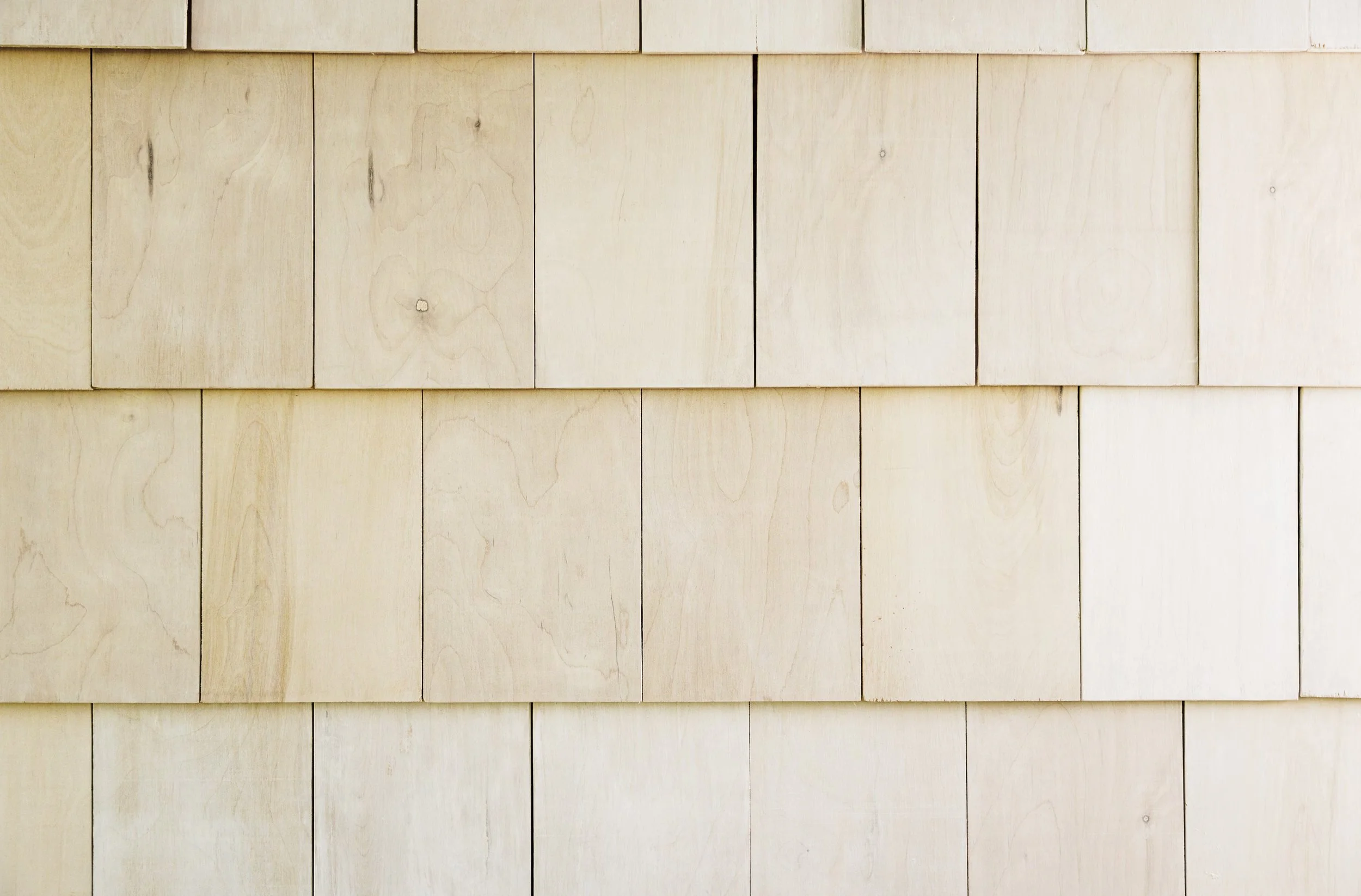
The material palette reinforces the familiarity of Central Valley Accessories. CDX plywood—the lowest grade sheet wood readily available—is typically used in agricultural settings for its affordability and durability. In the Poly Canyon Accessories, it is treated with traditional whitewashed lime, recalling the sun-bleached, utilitarian finishes of agricultural tradition. The oversized two-foot lap siding and one-foot-six-inch shingles exaggerate conventional cladding dimensions, creating a play on scale that mimics and transcends the language of the typology set. The Poly Canyon Accessories operate as distilled abstractions of the region’s architectural fabric, narrowing the gap between subject matter and installation
“By celebrating these structures, we are reminded that the most consequential architecture isn’t always the most conspicuous–it is often found in the margins, in the quiet resilience of the ordinary.”
Poly Canyon Accessories stand as a testament to the power of the ordinary, challenging established norms and expanding the boundaries of architectural consideration. Just as they assert their presence within the Central Valley’s agricultural tapestry, they beckon us to reevaluate not only their intrinsic value but also the broader impact of such unassuming yet resonant forms of architectural discourse. Their presence is not about spectacle or grandeur, but about recognizing how small-scale interventions can carry immense weight. For architectural designers, this not only means expanding the canon beyond the monumental, but also embracing new ways of engaging with diverse practices. By celebrating these structures, we are reminded that the most consequential architecture isn’t always the most conspicuous—it is often found in the margins, in the quiet resilience of the ordinary.